
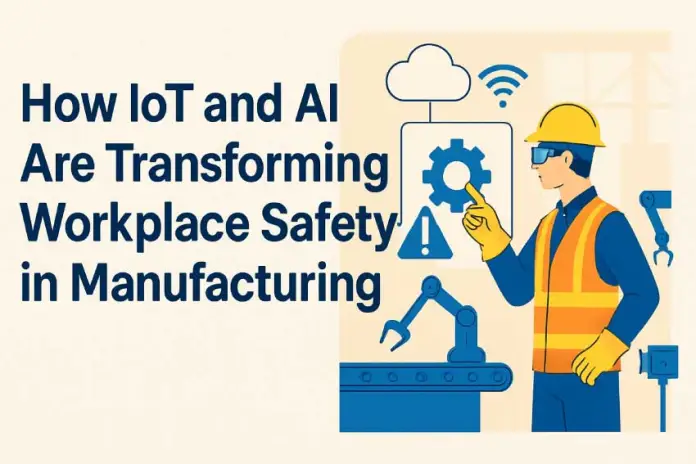
Workplace Safety in the Digital Age: IoT Sensors and Predictive Analytics
Workplace safety has evolved from reactive protocols to a proactive, data-driven system. By leveraging IoT wearables and predictive analytics, organizations can now monitor biometrics, environmental hazards, and machinery proximity in real-time. This digital approach allows for the identification of risk patterns before accidents occur, transforming the workplace into a safer, more responsive environment.
For decades, workplace safety was largely reactive. A supervisor would walk the floor, spot a hazard, and fix it—or worse, a safety protocol would be updated after an accident had already occurred. However, the rise of the Internet of Things (IoT) and Predictive Analytics is turning this model on its head.
In 2026, safety isn't just a set of rules in a handbook; it's a real-time, digital nervous system that protects workers by predicting danger before it strikes.
The New Safety Toolkit: IoT Sensors
The "Digital Age" of safety starts with data collection. By embedding sensors into the environment and onto the workers themselves, companies can monitor risk factors that were previously invisible.
Wearable Biometrics: Smart helmets and vests now monitor a worker's heart rate, body temperature, and fatigue levels. If a worker in a high-heat environment shows signs of heat exhaustion, the system alerts both the worker and their supervisor to take an immediate break.
Environmental Sensors: Small, low-power IoT devices monitor air quality, gas leaks, noise levels, and radiation. Unlike traditional wall-mounted alarms, these sensors form a "mesh" that provides localized alerts for specific zones.
Proximity Sensors: Heavy machinery and forklifts are now equipped with sensors that detect the presence of human workers. If a person enters a machine's "danger zone," the equipment can automatically slow down or shut off entirely.
From Data to Action: The Role of Predictive Analytics
Sensors provide the "eyes" and "ears," but Predictive Analytics provides the "brain." By feeding historical accident data and real-time sensor feeds into AI models, organizations can identify patterns that lead to incidents.
1. Hazard Identification
Predictive models can analyze thousands of variables—weather conditions, time of day, machine age, and even worker shift patterns—to identify "High-Risk Windows." For example, a system might find that slip-and-fall accidents in a specific loading dock increase by 40% when humidity is high and the 3rd shift is working. Managers can then proactively deploy extra anti-slip measures.
2. Digital Twins for Safety Training
Using IoT data, companies create "Digital Twins" of their facilities. Safety officers can run virtual simulations of emergency scenarios, such as fires or chemical spills, to determine the most efficient evacuation routes and identify potential bottlenecks before they happen in the physical world.
The Human Element: Empowering the Workforce
A common misconception is that IoT monitoring is about "Big Brother" surveillance. In reality, the most successful implementations are those that empower workers.
Real-Time Feedback: Workers receive haptic alerts (vibrations) on their wearables when they enter a restricted area or use improper lifting techniques, allowing them to correct their behavior instantly.
Shared Responsibility: Dashboards on the factory floor display live safety metrics, turning safety into a collective goal rather than a top-down mandate.
Conclusion: Zero Harm is the New Standard
The integration of IoT and analytics is moving the industry closer to the goal of "Zero Harm." By shifting from a culture of compliance (following rules to avoid fines) to a culture of prevention (using data to avoid injury), businesses are proving that digital transformation is as much about protecting people as it is about increasing profits.