
The Rise of Edge Computing: Why Processing Data Locally Matters More Than Ever
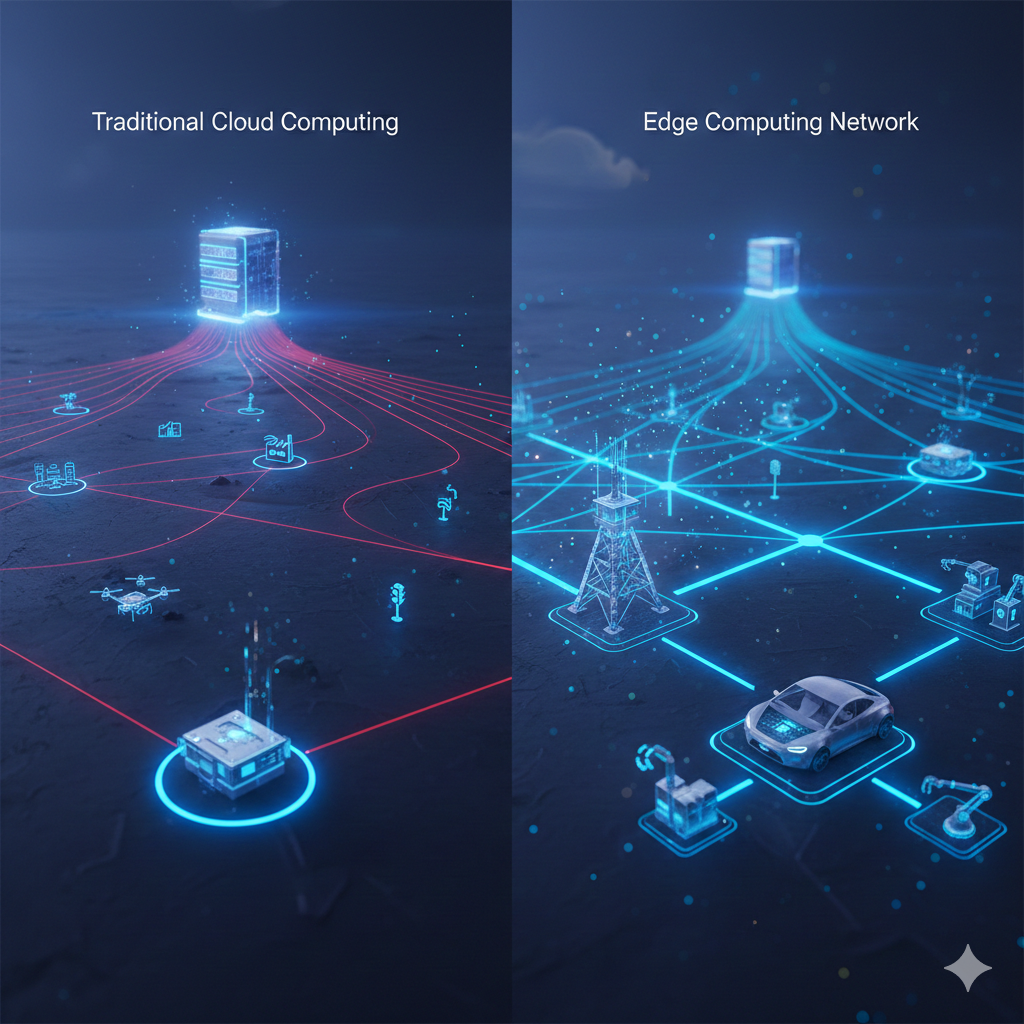
Edge computing moves data processing away from centralized cloud servers and closer to the devices themselves. This shift is driven by the need for ultra-low latency, reduced bandwidth costs, and improved data privacy. While the cloud remains vital for long-term analytics, the "Edge" is now the primary engine for real-time decision-making in industries like autonomous transport, smart retail, and industrial manufacturing.
The Rise of Edge Computing: Why Processing Data Locally Matters More Than Ever
For the past decade, the tech world has been obsessed with "The Cloud." The goal was to centralize everything: store your photos in the cloud, run your enterprise software in the cloud, and process your data in massive data centers located hundreds of miles away.
However, as we move into 2026, we are witnessing a massive shift in the opposite direction. We are moving toward the Edge. With the explosion of IoT devices, autonomous systems, and real-time AI, the round-trip journey to a distant cloud server is becoming a bottleneck. In the modern business landscape, speed isn't just an advantage—it's a requirement.
What Exactly is Edge Computing?
Edge computing is a distributed computing framework that brings computation and data storage closer to the sources of data, such as IoT devices or local edge servers. Instead of sending every raw data point to a central "brain," the "edge" handles the immediate processing locally.
Think of it like a professional kitchen: The "Cloud" is the corporate headquarters that handles long-term strategy and recipes, but the "Edge" is the chef on the line who makes split-second decisions to ensure the steak doesn't burn.
The "Triple Crown" of Edge Benefits: Latency, Bandwidth, and Privacy
Why are businesses pivoting so hard toward local processing? It comes down to three critical factors that the centralized cloud simply cannot solve on its own.
1. The War on Latency
In many modern applications, milliseconds are the difference between success and failure.
Autonomous Vehicles: A self-driving car generates gigabytes of data every minute. It cannot wait for a cloud server to tell it to brake when a pedestrian steps into the street.
Industrial Automation: On a high-speed assembly line, a sensor that detects a defect must be able to halt the machine instantly. A 100ms lag in cloud communication could result in thousands of dollars in wasted material.
2. Bandwidth Optimization
By 2025, it was estimated that over 75 billion IoT devices would be connected worldwide. Streaming raw data from every single "smart" camera, thermostat, and industrial sensor to the cloud would overwhelm even the most advanced 5G networks. Edge computing allows devices to process data locally and only send the "highlights" or relevant summaries to the cloud, drastically reducing bandwidth costs.
3. Enhanced Privacy and Compliance
In an era of strict data residency laws (like GDPR and HIPAA), moving sensitive data across borders or even out of a physical building can be a legal nightmare. Edge computing allows hospitals to run diagnostic AI directly on medical devices, ensuring patient data never leaves the premises, while still benefiting from advanced analytics.
The "Cloud-Edge" Harmony
It is a common misconception that edge computing will "kill" the cloud. In reality, the two are becoming a powerful hybrid duo.
The Edge handles the tactical: real-time processing, immediate action, and data filtering.
The Cloud handles the strategic: long-term storage, training complex AI models, and big-data analytics across an entire global enterprise.
The Road Ahead: 5G and Edge AI
As we look toward the next five years, the rollout of 5G is the final piece of the puzzle. 5G provides the high-speed "pipes" that allow edge devices to talk to each other with near-zero lag. When you combine this with Edge AI—specialized chips that allow devices to "think" without an internet connection—we are entering an era of "Real-Time Everything."
Conclusion
The shift to the edge represents a maturation of our digital infrastructure. We’ve realized that while the cloud is great for the "Big Picture," the edge is essential for the "Now." For businesses looking to remain competitive in 2026 and beyond, the question is no longer if they should adopt edge computing, but how quickly they can deploy it to the front lines of their operations.