
Design Thinking in Practice: 5 Companies That Revolutionized Their Industries
Design Thinking is a user-centric methodology that prioritizes empathy and iterative testing. By observing real-world user behavior and prototyping solutions based on those observations, companies like Airbnb, IBM, and Netflix have been able to disrupt established markets and create brand loyalty that transcends traditional product features.
In the modern business world, innovation is often mistaken for simply having the best technology. However, some of the most successful market disruptions of the last decade didn't come from a lab, but from a shift in perspective. This shift is known as Design Thinking—a human-centered approach to innovation that integrates the needs of people, the possibilities of technology, and the requirements for business success.
Unlike traditional problem-solving, which often starts with a solution and looks for a problem, Design Thinking starts with empathy. It requires looking at the world through the eyes of the customer to uncover "unmet needs."
The Design Thinking Framework
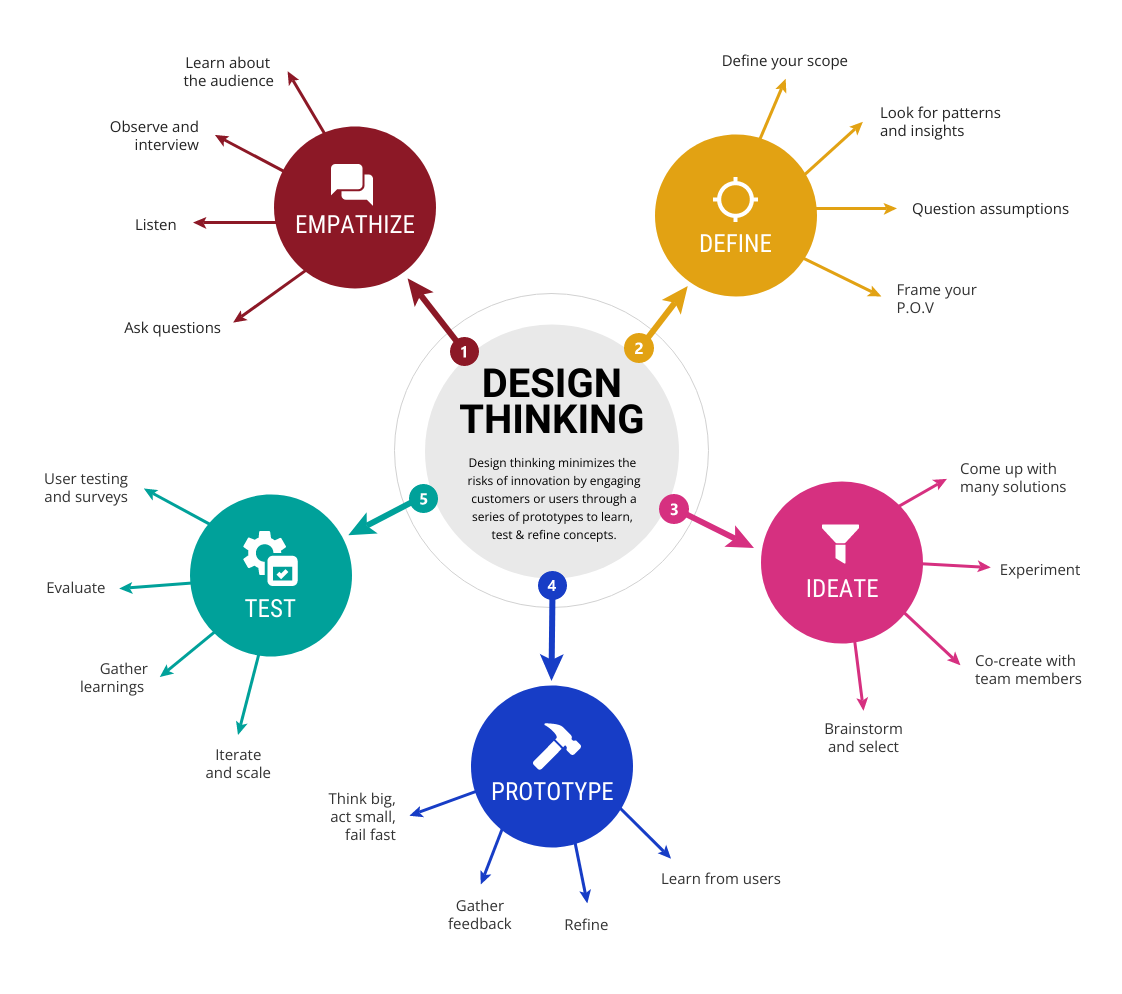
Before looking at the companies, it is essential to understand the five-stage methodology they all share:
Empathize: Research your users' needs.
Define: State your users' needs and problems.
Ideate: Challenge assumptions and create ideas.
Prototype: Start to create solutions.
Test: Try your solutions out.
1. Airbnb: From Near-Failure to Global Giant
In 2009, Airbnb was close to bankruptcy. The founders realized that the reason people weren't booking was that the photos of the apartments were terrible. Using Design Thinking, they stopped focusing on code and started focusing on the user experience. They traveled to New York, rented a camera, and spent time with hosts to take high-quality photos. This "non-scalable" act of empathy helped them understand what travelers actually needed to feel safe and excited about booking, leading to a massive spike in revenue.
2. PepsiCo: Design as a Strategic Driver
When Indra Nooyi became CEO of PepsiCo, she realized the company needed more than just new flavors; it needed a new way of interacting with customers. She hired the company’s first Chief Design Officer and integrated Design Thinking into every product cycle. The result was products like "Pepsi Spire," a high-tech soda fountain that focused on the interaction and customization experience rather than just the beverage itself.
3. IBM: Scaling Empathy for the Enterprise
IBM is a massive organization, but they managed to pivot their entire culture toward Design Thinking. By creating the "IBM Design Language," they shifted their focus from "shipping features" to "solving user outcomes." They invested $100 million in building a design-led organization, resulting in products that were more intuitive and significantly reduced the time spent on rework and maintenance.
4. Nike: Moving Beyond the Shoe
Nike has long used Design Thinking to stay ahead of competitors. By empathizing with athletes (and non-athletes alike), they realized that people didn't just want better shoes; they wanted better runs. This led to the creation of the Nike+ ecosystem. By prototyping digital tools that track progress and build community, Nike transformed from a garment company into a personal fitness partner.
5. Netflix: Redefining Convenience
Netflix’s transition from a DVD-by-mail service to a streaming giant is a masterclass in Design Thinking. They constantly iterate based on user behavior. By defining the "pain point" of waiting for a movie or struggling to find something to watch, they developed the algorithmic recommendation engine and the "Auto-Play" feature. These weren't just technical upgrades; they were solutions to the psychological desire for seamless entertainment.
How to Apply This in Your Organization
You don't need a multi-million dollar budget to implement these principles. Small teams can start by:
Interviewing Customers: Move beyond surveys and actually watch how people use your product.
Encouraging "Wild Ideas": In the ideation phase, no idea is too strange.
Failing Fast: Build low-fidelity prototypes (even on paper) to test your assumptions before spending money on development.
Conclusion
Design Thinking is not a "one and done" workshop; it is a continuous cycle of curiosity. The five companies mentioned above didn't succeed because they had a secret formula, but because they were willing to admit they didn't have all the answers—and they went to their customers to find them.